|
|
|
|
|
|
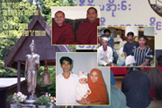
Karen Burmese |
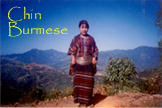
Chin Burmese |
Karenni Burmese |
Other minorities |
| REFUGEES FROM BURMA |
From late 2006 to the present, one of the largest arrival of refugees to World Relief Atlanta has been Burmese minorities. Most of the early arrivals came from two distinct people groups: the Karen and the Chin. The more recent majority are an ethnic group called the Karenni. Other arrivals from Burma have come from the hundreds of other ethnic minorities in the country (Mon, Shan, Pa-O) or, in some cases, are ethnic Burmese (Bamar) also fleeing from oppression following anti-government demonstrations in 1988 and 2008. All these refugees from the country of Burma (now officially called Myanmar) have faced persecution at the hands of a military government because their communities dare to question, challenge, and fight for basic rights. Most have faced a long history of abuse by the Burmese military as forced labor or undergone dislocation as the army has taken over village areas for its own use. Despite coming from the same country, they all have different languages and traditions and have had rather different refugee experiences in their countries of first asylum. Now they are all arriving to Atlanta to learn and adjust together. Learn more about the individual groups by clicking the photos below.
Burmese Minorities: Photos of resettlement of refugee families from Burma in Atlanta
|
|
|
|
|
|
Karen Burmese |
Chin Burmese |
Karenni Burmese |
Other minorities |
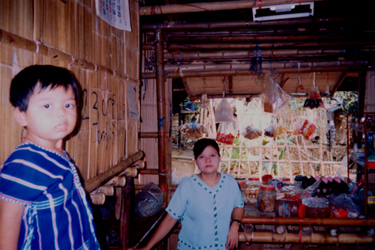 KAREN BURMESE:
Coming
out of refugee camps in Thailand, the Karen (or Pwa Kin Yaw in their
language) needed some education to begin their journey to the US. Many were apparently fearful that they would arrive to
the United States only to become lower-class servants with few rights since this is the kind of existence
they had seen under Burmese rule. They have been in the camps long enough
for most of the children to have been born there and never known any other life.
KAREN BURMESE:
Coming
out of refugee camps in Thailand, the Karen (or Pwa Kin Yaw in their
language) needed some education to begin their journey to the US. Many were apparently fearful that they would arrive to
the United States only to become lower-class servants with few rights since this is the kind of existence
they had seen under Burmese rule. They have been in the camps long enough
for most of the children to have been born there and never known any other life.
History & culture: The Karen Burmese are a minority population from Burma who have been seeking independence in the face of a militant dictatorship for almost sixty years. While some have participated in liberation armies, most have simply been civilians caught in an increasingly oppressive environment. Though some are Buddhist, most have a strong Christian tradition which also sets them apart from the Burmese majority. Especially affected are those from rural village areas without access to resources and education. Most of the Karen come from poor rural backgrounds having grown up in villages in the jungle-filled mountains of southeast Asia. Most villages were self-sustained, families growing their own food with occasional forays into the town and without modern conveniences such as electricity and plumbing. Some men held labor jobs in the city or coastal jobs such as fishing (which were actually quite dangerous due to safety hazards and pirate attacks). Few had education beyond primary school; some none at all.
Like many other Burmese minorities, the Karen have faced severe persecution because of their desire for independence from the harsh military rule of Burma. Some tell stories of Burmese soldiers burning their village and forcing them to carry their guns and equipment to the point of exhaustion. As violence against ethnic civilians has increased, most of the Karen (nearly 120,000) have fled to neighboring Thailand where they have lived in refugee camps for ten or fifteen years. The Burmese government has fomented a civil war as well by encouraging a breakaway faction of Karen to fight the others. In the Thai refugee camps, families still face a hard life since food is scarce and the Thai government refuses to grant any additional assistance or permanent placement though one advantage for the children is access to more education. With ongoing insecurity and the inability of the families to return to their homeland, they were finally accepted as a group for resettlement to the United States.
Resettlement experiences: Given their rural background, the Karen Burmese face many of the challenges of adjustment to life in America that other similar groups have faced: learning the use of modern facilities, adjusting to new rules for the home and childcare, understanding the complexities of city jobs and transportation, and so on. While some of the women had the chance to work in hotels and such in the large cities of Thailand and thus have a bit more exposure to modern life, most of the families remain very rural with only preliminary education. Many offices have also noted the difficulty in communicating with the group since English is such a different language from their own and the families do not readily respond to non-verbal cues. Most significantly, the heavy emphasis on respect and authority among the group means that they often do not voice their needs or problems (or tend to wait to do so through intermediaries) which actually frustrates attempts at a quick adjustment.
At the same time, I have seen that the Karen families seem much less afraid to branch out and try things on their own than most rural families at arrival. They are also a very tight community and some of the Karen Burmese who came to the US in the past are really helping the new arrivals. As a whole, they have been exceedingly conscientious in saving money for the future, keeping up with important paperwork and documents, and accessing public transportation---keys to success that many other refugee populations do not achieve so quickly. The Karen are very excited about the freedoms and comforts they find in America and are anxious for their family members to know that all is well here.
Community: The Karen population of Atlanta is growing and becoming very well organized with the help of some community leaders who have already lived here for a number of years. I have enjoyed getting to know the families that have arrived with World Relief. They are always very kind and calm whatever the circumstances and always greet me with an enthusiastic "Gooh mohniii!" when I arrive at their door. Because there is a large Asian population in Atlanta, the Karen families have access to many of the products from their homeland as well as connections for jobs. Members of the general Burmese community (including people from my local church) have embraced the group and are helping in their transition as well. I have had the chance to attend a number of family and community events with the group including the 2006 and 2007 Karen lunar new year. These were great opportunities to see how the Karen are coming together in Atlanta and to learn about their history and culture. Follow this link for some photos and stories of Burmese resettlement for more about the Karen in Atlanta.
THE CHIN BURMESE: Though from the same country of origin, the Chin Burmese arriving to Atlanta have a somewhat different history and refugee experience than their Karen neighbors. They are exiting a tenuous refugee situation in the metropolitan city of Kuala Lumpur in Malaysia and arriving to an already strong Chin community in the Atlanta area. They thus arrive already having contacts and an understanding of what lies ahead of them for the future.
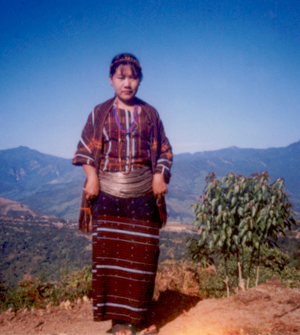 History & Culture: The Chin are one of the larger minorities in Burma and have long considered
themselves as a distinctive and important group. The group is actually
subdivided into a large number of smaller "tribes" with distinct
languages such as Zotung, Falam, Tiddim, and Hakah. They all speak Burmese
together amongst themselves as a common language. Like the Karen, the Chin have a history of
Christian tradition and were closely tied to the British during the colonial era.
Indeed, many Chin fought side by side with the British and Americans back in World War
II. Their
section of the country normally called "Chin State" has been
modernized for a long time. Though still largely farmers, the group has
had more access to education and western lifestyles. Unfortunately, under
the harsh military rule of the country, any who dare to question the government
or even talk about the sad state of the country take their life in their
hands. Actions against the Chin as a whole have escalated in recent
years as dissatisfaction and speaking out have increased.
For this reason, more and more Chin have had to flee in the past few years in order to escape almost certain imprisonment and perhaps even death.
History & Culture: The Chin are one of the larger minorities in Burma and have long considered
themselves as a distinctive and important group. The group is actually
subdivided into a large number of smaller "tribes" with distinct
languages such as Zotung, Falam, Tiddim, and Hakah. They all speak Burmese
together amongst themselves as a common language. Like the Karen, the Chin have a history of
Christian tradition and were closely tied to the British during the colonial era.
Indeed, many Chin fought side by side with the British and Americans back in World War
II. Their
section of the country normally called "Chin State" has been
modernized for a long time. Though still largely farmers, the group has
had more access to education and western lifestyles. Unfortunately, under
the harsh military rule of the country, any who dare to question the government
or even talk about the sad state of the country take their life in their
hands. Actions against the Chin as a whole have escalated in recent
years as dissatisfaction and speaking out have increased.
For this reason, more and more Chin have had to flee in the past few years in order to escape almost certain imprisonment and perhaps even death.
Most of these Chin refugees have ended up fleeing to Malaysia around the large city of Kuala Lumpur after a long walk through Thailand. Unfortunately, despite allowing UNHCR to register them as refugees, Malaysia largely refuses to recognize the refugee status of the Chin. They are under constant threat that the police will arrest any Chin men that they discover. For this reason, the men must "hide" as a big group in the jungle areas outside the city, sleeping under plastic sheets, until they can get under the special protection of UNHCR. If caught before, they are jailed and deported to Thailand. Despite this odd living situation, the Chin men are able to go into the new areas of the city with less police presence to shop at the markets and obtain work in the numerous modern lighting factories there and restaurants there. Now a focus for resettlement to the United States, these families are beginning to arrive in Atlanta to join those who have come in the past.
Resettlement experiences: Because of having had more exposure to modern towns and cities as well as more access to education, the Chin Burmese families are set to do very well in the United States. Many come with more English and a better understanding of how to adapt to life in the United States than some of their more rural neighbors. As a result, I find that the Chin are moving particularly quickly into taking care of their own needs and do not hesitate to make their own decisions. There are of course differences that they will have to adjust to over time: from the need for a more direct style of personal interaction to dealing with people from a variety of cultures to having patience for the slow pace of resettlement. You can see some of their experience in pictures on the following page about Burmese resettlement.
Community: The Chin are already a large and established community within Atlanta and the United States as a whole. Some members of the national Chin organization reside in Atlanta and have approached us about helping in the resettlement of their community. Many formerly arrived community members already own houses and work in good jobs. As a result, new arrivals have already had the opportunity to take trips to downtown and the mountains, receive extra home furnishings, and link up with several large ethnic churches in the area. We even have some Chin working in high-end Malaysian restaurants because of their connections. The community will obviously be a strong source of support for their newly arriving community members.
THE KARENNI: The Karenni were the largest Burmese group to arrive during the end of the 2009 year. From Karenni state in Burma, they represent several sets of ethnicities or sub-tribes grouped together but all speak the Karenni language called Kayah.
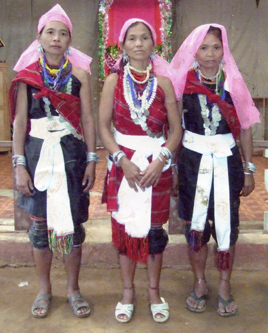 History & Culture: The Karenni are from the eastern part of
Burma called Karenni state. Like all Burmese ethnic minorities, they are
at odds with the government simply because they want to continue to use their
own language and follow their own cultural traditions. Their mountainous region of Burma remains extremely poor and
rural and contains some of the most isolated areas of the country. Despite
this, in many areas village life has been disrupted by forced
relocations by the Burmese military state which began in earnest in 1996. Some Karenni are Buddhist or
Christian but there are also many of the older generation who still retain the
animistic beliefs of their ancestors. As a whole, the Karenni are famous
for a variety of body-altering practices followed by the various sub-groups such
as using stacks of gold rings to stretch their neck or using weights and plugs
to stretch their earlobes. These oddities have led to them often being
exploited for the tourist trade.
History & Culture: The Karenni are from the eastern part of
Burma called Karenni state. Like all Burmese ethnic minorities, they are
at odds with the government simply because they want to continue to use their
own language and follow their own cultural traditions. Their mountainous region of Burma remains extremely poor and
rural and contains some of the most isolated areas of the country. Despite
this, in many areas village life has been disrupted by forced
relocations by the Burmese military state which began in earnest in 1996. Some Karenni are Buddhist or
Christian but there are also many of the older generation who still retain the
animistic beliefs of their ancestors. As a whole, the Karenni are famous
for a variety of body-altering practices followed by the various sub-groups such
as using stacks of gold rings to stretch their neck or using weights and plugs
to stretch their earlobes. These oddities have led to them often being
exploited for the tourist trade.
Many Karenni have fled to refugee camps Thailand over the years, some having lived there for quite some time. Even in Thailand, the Karenni are in some of the remotest camp areas, particularly the camp called Ban Mai Nai Soi, and have thus had much less access to education and medical care services. Many do not even speak Burmese which is a challenge for the agencies needing interpretation.
Resettlement experiences: The arrival of the Karenni to the US has presented a challenge to agencies nationwide because there are almost no native speakers of Kayah that have resided in the United States long enough to have very good English and interpretation skill. While the vast majority speak at least rudimentary Burmese, there is a definite barrier in their understanding that agencies are having to work around. The fact that they are largely from a much more rural background with less overall education and medicine compounds the problem. We have already noticed a larger percentage of this population arriving illiterate in their own language and with more disabilities such as blindness and deafness. Some have never even seen a car and there are already many 'amusing' stories of car sickness in the first ride from the airport. Of course, those younger Karenni who have grown up in the Thai camps their whole lives have a little bit more education and knowledge of the wider world. They are already emerging as leaders for their community.Community: One advantage for the Karenni arriving to Atlanta has been that previous arrivals of Karen and Chin have already paved the way for them to access services and community programs. Moreover, the Karenni seem very geared towards getting themselves organized as a group. It has taken almost no time for the Karenni community in Atlanta to grow from literally no one to quite a large and connected community. Those that came a few months earlier to other agencies are already visiting and mentoring those that are following. Hopefully, they will all adapt quickly and join their Burmese neighbors in jobs and school.
Sharing: One Karenni elder has shared a lot of stories and memories with me that I have made available here.
 OTHER
GROUPS:
In addition to the lage groups of Karen, Chin, and Karenni, there are multitudes of
other ethnic minorities from Burma arriving to Atlanta.
OTHER
GROUPS:
In addition to the lage groups of Karen, Chin, and Karenni, there are multitudes of
other ethnic minorities from Burma arriving to Atlanta.
You may also be interested to read the excellent culture profile on the Burmese by the Center for Applied Linguistics.
Return to main page